Opt-In AI

Opt-In AI calls for a change in default settings for AI use on web browsers, apps, and search engines. Why? The global AI demand in 2027 is projected to account for 30–47 million people’s yearly water consumption (about the population of Canada).

The Problem
AI is growing rapidly– and with it we are being bombarded with unwanted and unneeded AI tools that are negatively impacting our environment.
According to scientists at the University of California, Riverside, each 100-word AI prompt is estimated to use roughly one bottle of water. Why? Because AI data centers use massive amounts of water for cooling and energy to power operations
For example, a 10-minute, in-depth interaction with an AI assistant can use up to 1.5 liters of water.
And this is just the beginning…
AI is projected to increase 25-fold in the next decade: the global AI market will soar from $189 billion in 2023 to an est. $4.8 trillion in 2033. (UNCTAD)
The total annual water consumption of the global AI industry is projected to reach billions of gallons by 2027.


Climate
By 2030, AI is expected to emit 24-44 million metric tons of CO2 annually, or the equivalent of adding 5-10 million cars to U.S. roadways each year. (Nature)

Water
AI will drain 731-1,125 million cubic meters of water annually, equivalent to the annual household water usage of 6 to 10 million Americans. (Nature)

Energy
AI data center use is expected to grow 15% per year– 4x faster than all other sectors combined. AI will use 945 TWh by 2030, or 3% of all global energy use. (It was at 1.5% of global energy use in 2024) (IEA)
Not Everyone Wants AI
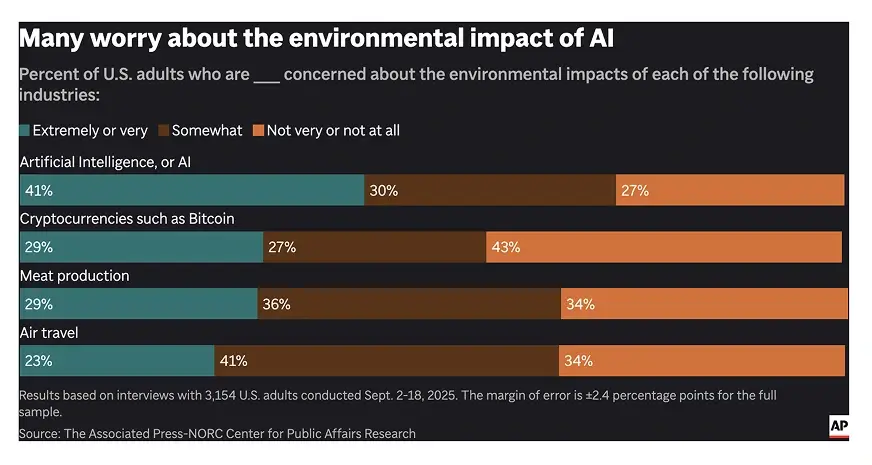
Americans are worried about the impact of AI. A new 2025 study shows that 4 in 10 Americans are “extremely” or “very” worried about AI’s environmental impacts, and 7 in 10 have some concern. (AP)
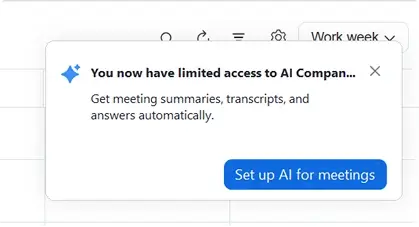
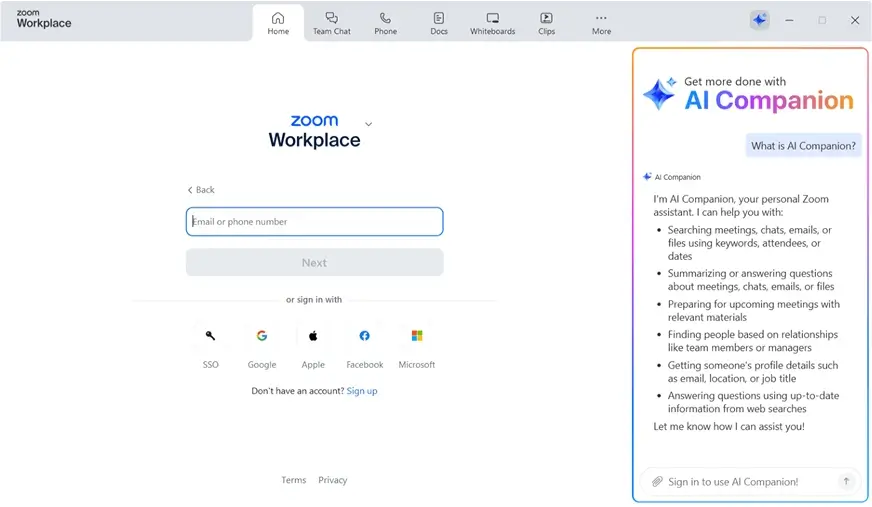
Yet AI is installed in almost every web browser, search engine, and new app that we use.
But what if the default was different?
We believe AI should be available on demand only so that we don’t have to waste the time shutting off AI pop-ups and companions. Without them, it’s better for the planet, and one additional step we don’t have to take to be more eco-friendly.
Join us today in convincing more companies to make AI available upon request!
Click here to make your voice heard.
There is more!
AI & Cognitive Offloading
Research has shown that over-reliance on generative AI and language learning models (LLMs) can decrease our capacity to cognitively perform over time. By reducing our reliance on AI plug-ins we can also ensure we protect our cognitive capacity!
See the research & commentary:
- MIT Media Lab: Your Brain on ChatGPT (2025)
- Polytechnique Insights: Generative AI: The Risk of Cognitive Atrophy, Ioan Roxin (2025)

Our Solution
We are asking for a default setting change on all search engines, apps, and web browsers to use AI “by request only.”
Default setting changes are effective because the majority of users tend to stick with whatever they are provided as the default setting. In this case, that would reduce AI use by NOT making it the automatic choice.
“Of all of the tools in the choice architect’s repertoire, default rules may be the most promising; they are almost certainly the most discussed. Whether the area involves savings behavior, poverty reduction, or the environment, default rules have had significant effects on outcomes.”
Cass Sunstein, 2017
We have seen the positive effects of a default setting ourselves with our Cut Out Cutlery campaign. Behavior changed by 678% when the default was changed to make plastic cutlery available upon request (see the study).
Read more on the power of default setting changes:
The Marketing Society: Default Settings
Take Action
We are asking tech companies like Google, Bing, Yahoo, Zoom, Adobe, Canva, and more to change their default setting to not automatically provide AI in an effort to reduce our impact on the environment.
It’s already starting to work:

Join us in our campaign to have AI by REQUEST only! Simply use the email template below to send an email to representatives of the selected tech companies to let them know you want change. Be sure to share with others so that we can really build momentum!